
“When you look at the pace of retail,” Zipline CEO Melissa Wong said in her recent webinar on retail execution, “we used to say, ’oh, it’s gonna slow down in a couple years.’ And I think at this point, we know it’s not gonna slow down.”
It’s no bold statement saying things are hectic in retail right now. 2025’s particular influx of chaos has put retail operations, and the industry’s future, into hyperfocus. With the funny effect of shining a light on key executional and operational gaps—while overshadowing just how long they’ve actually been there.
“We’ve seen, throughout the industry, an average of only 29% execution,” said Mel, who wrote her bestselling book, Stores Don’t Suck, after a decade in ops and comms at a Fortune 500 retailer. “Through many conversations and focus groups, I realized…people were trying the best they could, but weren’t set up for success.”
Cut to today, with economic uncertainty, tariff whiplash, and rapidly evolving technology making it that much harder for teams to stay on top of everything. More retailers are seeing their operational processes fall behind industry demands. And realizing they need to be able to prepare for what they can’t predict.
The good news? Underneath ranging catalysts, fancy tech, and dialed-up urgency, we’re looking at fundamental issues with fundamental solutions. Which can help cross-location execution soar to 90%+—within weeks in some cases—and HQ, store teams, and everyone in between handle anything that comes their way.
Watch the full webinar here and scroll down for a few key strategies it covered.
Creating Greater Alignment and Greater Agility
The challenge: The complexity of retail organizations and volume of tasks, details, and communications to account for can stall productivity and tangle up crucial pivots.
“Things are changing by the moment,” Mel emphasized. “You have to be more agile, and have all of the teams on the same page because you’re literally going from strategy A to B to C, then maybe back to like, A point 2. And to make that strategy successful, everyone needs to be doing it together.”
It’s impossible for any retailer to be nimble without being internally aligned. When everyone understands the company’s goals, priorities, and plans to achieve them, that cohesive focus leads to faster and smoother execution. Each employee—from HQ to the sales floor—understands what needs to be done and how to do it, without the flurry of siloed explanations, updates, reinterpretations, and follow-ups that bog down so many initiatives. So when things have to change (or change back) quickly, the runway is clear for every single contributor.
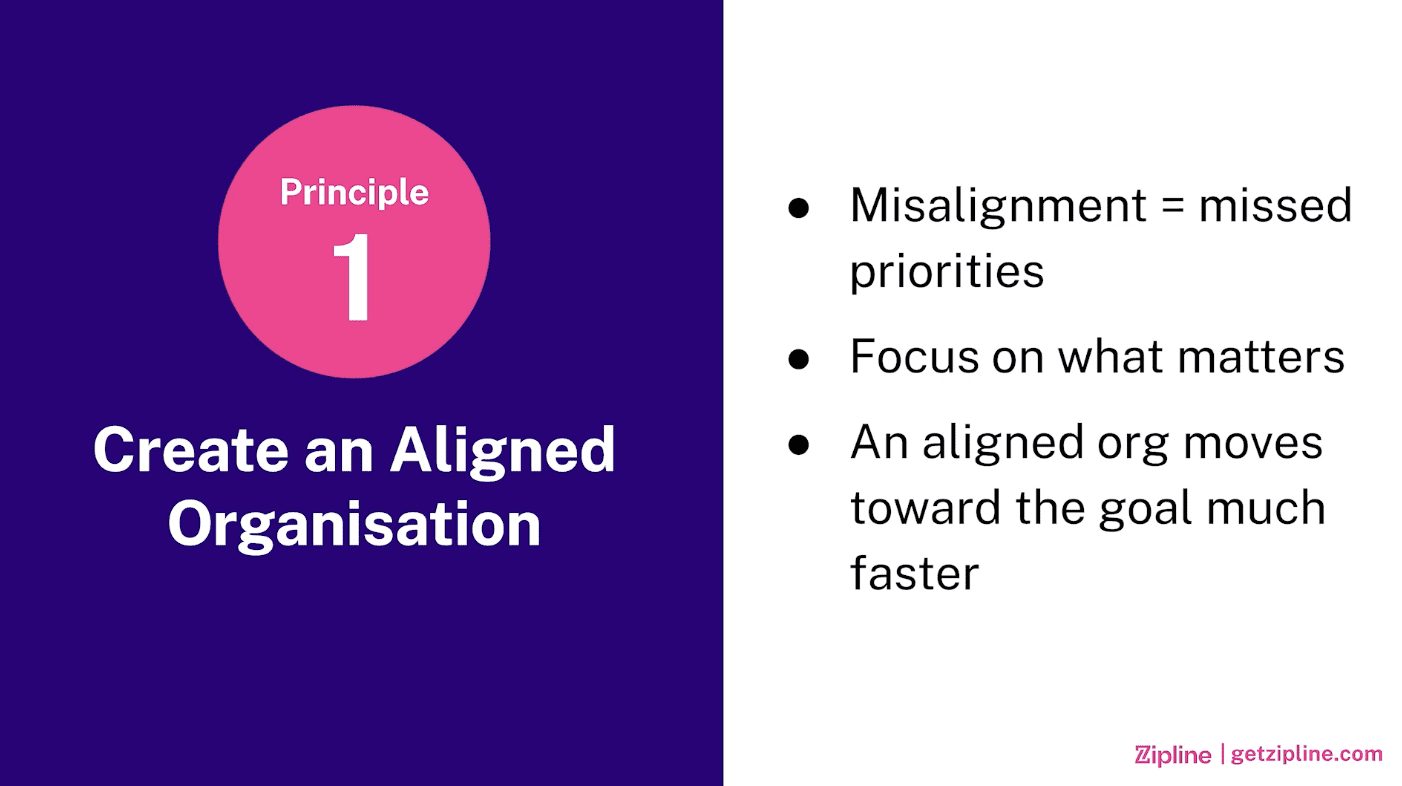
“There are actually two types of alignment that surface as being important,” Mel explained. “One is HQ alignment, ensuring different HQ departments…have visibility into each others’ work and what stores are doing, to make sure everyone is going in the same direction.”
She continued, “And then second, it really is clarity throughout the field organization, through all levels so everyone understands what the priorities are, and something a district manager is saying doesn’t differ from what HQ is saying, or pilot stores aren’t getting confused from full-fleet stores.”
Just look to Warby Parker for what Mel calls the “gold standard” of cross-organization alignment. By bringing everything into one platform—all communications, resources, tasks, performance metrics—they delivered one clear source of truth and were able to implement their One Frame of Mind program. This coupled practical execution with invaluable context and created a unified experience, both internally and throughout customer touchpoints.
“We’ve partnered with Warby for several years now, and year over year, they open new stores, their fleet is constantly growing…to do that and preserve that alignment and single brand voice is really impressive,” Emily Lane, Zipline Head of Brand and Audience and webinar co-host, chimed in.
Added Mel, “I definitely feel like that speaks to what we’re seeing today, in terms of being able to change and grow and be resilient. When the organization is aligned, you can go much faster, much more effectively, and cost-effectively.”
Head to 14:00 in the webinar for more discussion on this and Warby Parker’s story.
Supporting Autonomy Throughout the Organization
The challenge: Frontline teams often struggle between being micromanaged and left in the dark. A lack of clarity into broader company goals and initiatives, and how their day-to-day work meaningfully impacts them, leads to confusion and disengagement—while execution takes the toll.
The goal is “empowering people to the best of their ability to have context to make the best decisions possible for the business,” said Mel. “At Zipline, we believe employees want to work for your brand, right? There’s something that resonates with them…that you can harness if you communicate and engage with them in a meaningful way.”
This goes deeper than flashier updates or team-building exercises. It’s about connection—giving employees the information and support to clearly connect their work to company goals and brand vision. Making them feel not just engaged, but enrolled and empowered.
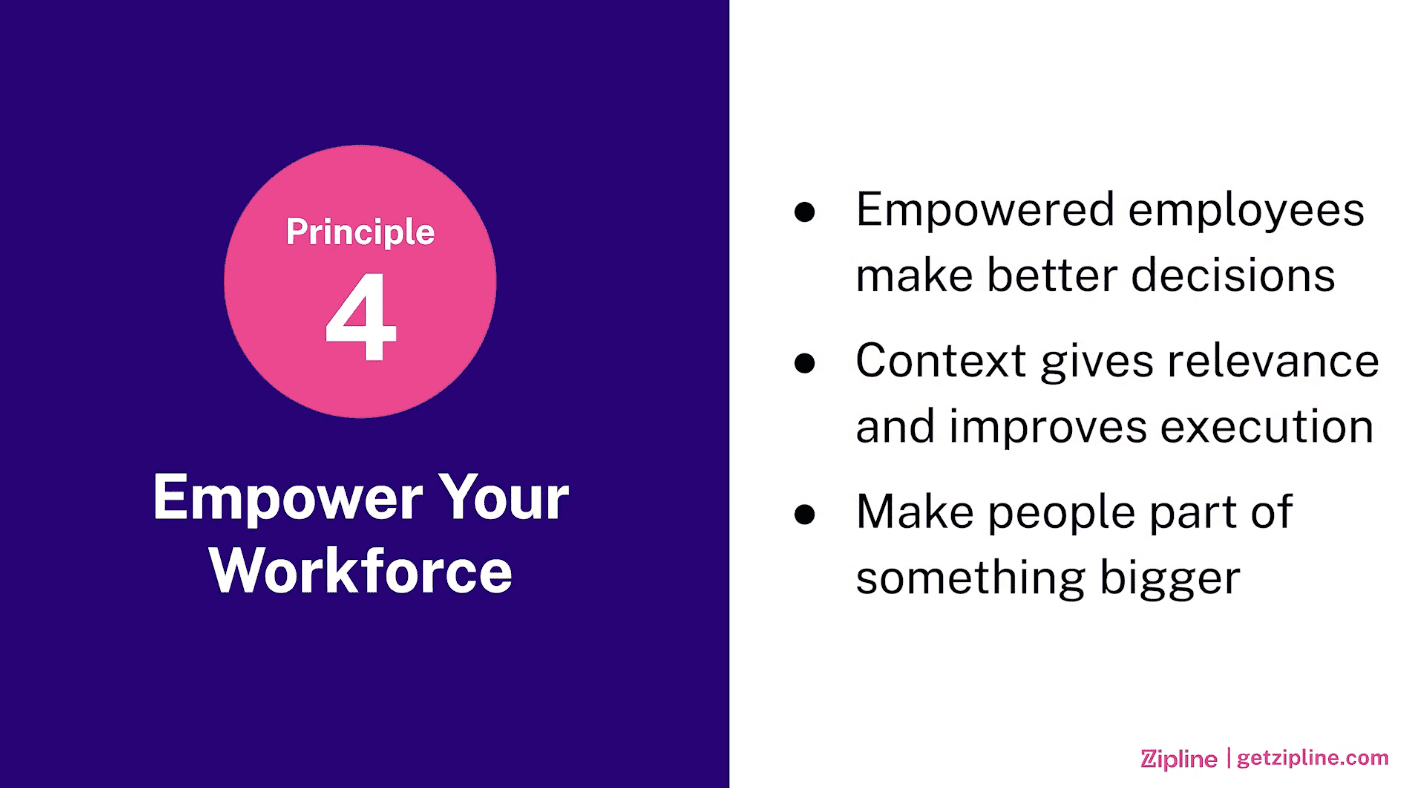
“Ideally,” explained Mel, “we want our store managers to feel like they can run it like they own it, within certain guardrails, and empower teams in it, and recognize that they can be the best brand ambassadors for customers.”
Zipline is built around connecting the “what” with the “why,” so every employee gets what they need to do their best work. And feel valued in doing it.
“If you can build, you know, ongoing business updates with the materials and resources, and connect the what with the why and the how, people become better business owners. That’s really how we look at empowering the workforce. It’s not just about feeling good…it’s helping people make better decisions for the business, which ultimately helps drive business results, and makes them feel like they matter more.”
And causes a ripple of benefits, from greater retention to faster and more reliable execution. Employees who are supported to act autonomously—with easily accessible information, a clear understanding of priorities and actions, and the reasons behind set goals—can make sound on-the-spot decisions and offer creative solutions from their unique vantage point.
“We have customers who are great at bringing their brand to life through the Zipline platform, almost like a marketing campaign for their internal audience…giving everybody the foundation to make those little decisions in the moment, because no two stores or two teams are alike,” Mel continued. “And they’re talking to customers—they can be that feedback conduit up to headquarters.”
Head to 33:25 in the webinar for more ways to engage and empower frontline teams.
Pragmatic Awareness for Meaningful Action
The challenge: Retail organizations can overlook the realities of how frontline teams work, and the circumstances they work within, for idealized operations that prevent getting critical insights to stay ahead.
Working in stores is “very interruption-driven,” explained Mel, who was inspired to write Stores Don’t Suck, and build Zipline, by the disconnection she saw between HQ and frontline execution. “There’s a very interesting workflow…when I reflect back on where the fall-down pieces happened, it’s in the structure of how frontline and store teams are set up. [Zipline is designed] to account for this kind of, like, shared responsibility to give visibility into all of the things to make sure the organization can move better, faster together.”
The core philosophy of setting each team up for success is behind every aspect of the platform, and comes up time and again with happy customers. But it’s not about any app, tool, or system—it’s about infusing visibility and real, grounded awareness throughout the organization.
A lot of what we’ve covered folds into this, from a centralized space for aligned operations to creating a feedback loop with frontline teams. But the final piece, and something flawless execution can’t happen without, is real-time measurement.
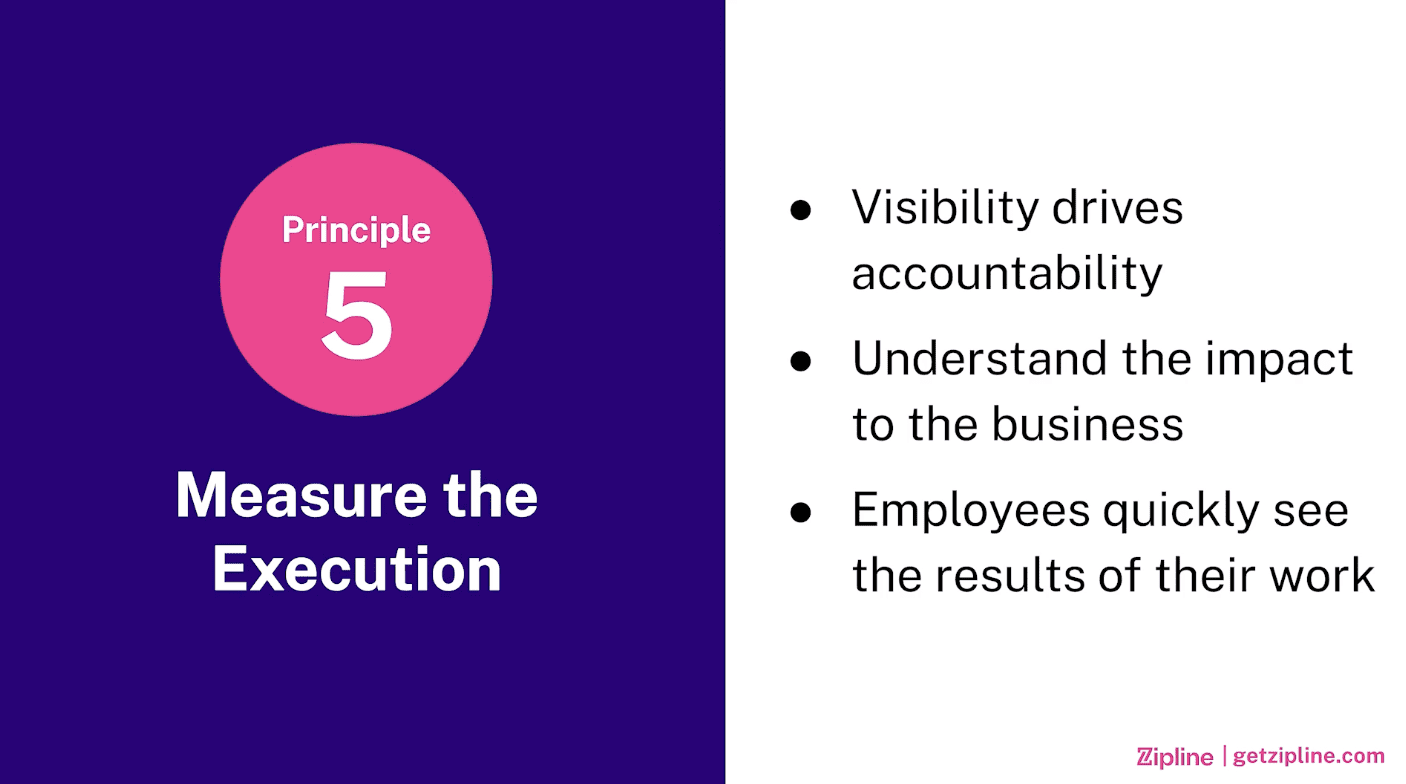
“There are two key pieces around measuring execution,” said Mel. “One is around visibility and one is accountability…we’ve kind of adopted the saying that ‘sunlight is the best disinfectant.’”
That means of-the-moment visibility into what’s being done, who’s doing what, and what’s driving engagement (for example, communications readership and message delivery). And ultimately, is this strategy working or not?
“When you’re making last-minute business changes, there’s always the question of—did the stores do the thing?” added Mel. “It’s looking at sales, traffic, execution, and being able to have a better understanding around the levers of the business and if the decisions you’re making are the right ones in conjunction with execution.”
Head to 39:00 in the webinar for more on real-time measurement and how a customer saw significant impact from one simple rule.
Core Principles To Implement Now (And Be Glad You Did Later)
“We’re asking teams to do so much more than we were even just five, ten years ago,” said Emily, with Mel continuing, “The pace of change is here to stay and going to actually get faster, because of the role of AI…then the question is…how do we calm the chaos as much as possible and make sure that people are as strategically oriented and set up for success as possible?”
By mirroring the connectedness of the customer and commerce experience in the way retail organizations operate. And building on that connected, centralized foundation to give teams and individuals the clarity, context, autonomy, and data to do exceptional work.
Emily laid it out: “You start with that clear alignment of where you’re going. You make sure people know exactly where to go with intent-based communication channels…so they’re able to ingest information without feeling overwhelmed, without having stuff fall through the cracks, and then giving them through that communication…the sense of ownership. Then measure the execution.”
So how do you actually get started?
Mel and Emily expand on and dive deeper into what’s covered here in the full webinar. You can also explore them, along with real examples from brands who’ve put each one to the test and step-by-step guidance for implementing them, in the free eBook From HQ to the Frontline: Five Rules for High-Impact Retail Execution.