
The success of a SaaS product is often measured by how much time the user spends on the platform. At Zipline, the less time customers spend in our platform, the better.
That’s because, for frontline teams, every minute matters. The less time they spend sorting through policy documents and update threads, the more time they have to help customers and drive sales.
Zipline’s engineering team has spent the last few years focused on how to give users time back by enabling them to retrieve the information they need without being bogged down in an avalanche of irrelevant or inaccurate documentation.
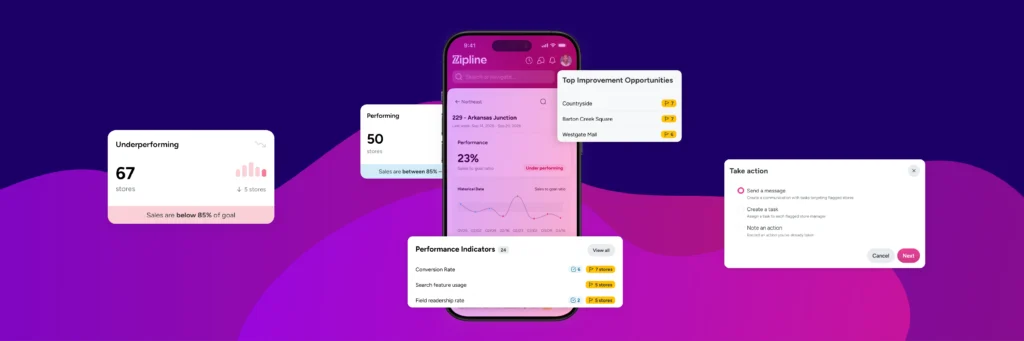
Zippy, Zipline’s conversational AI assistant, works by allowing users to ask questions in conversational language and receive accurate answers in seconds. Historically, the answers have come from a team’s own material: the resource library, communications, updates. Everything that was already inside of Zipline.
As modern retail employees contend with information sprawl, task creep, and the need for reliable real-time updates, Zippy helps frontline teams stay active on the store floor instead of searching through the platform for the answers they need.
And now, two years after the initial launch of Zippy, new MCP (Model Context Protocol) capabilities are changing up how and where information reaches users. Instead of only pulling from uploaded material, Zippy can now query live systems directly gathering real-time information on inventory, scheduling, and policy questions.
From “the wild west” to a flying squirrel
Before Zippy’s launch in 2024, senior software engineer Clinton Judy had already been following the rapid emergence of AI technology for years.
He’d watched companies like OpenAI and Anthropic advance the capabilities of large language models at speed, but it wasn’t until Clinton came across third-party research that he started imagining a world where the technology could be used in a product context for Zipline’s customers.
“I found out about this technique some people were experimenting with called Retrieval-Augmented Generation. That was a way to have your chatbot ‘know things,’ so to speak, about the things you want to ask it questions about,” he explains. In plain English, RAG allows you to feed an AI relevant information from your own data so it can answer questions accurately based on what you’ve shared.
“I was playing around with my own little RAG system on my computer and thought, I would love to have something like this at Zipline.” He believed that by enabling Zipline users to send queries about store policies, guidelines, and updates, it could improve the in-store experience for both frontline teams and shoppers.
After getting the green light, the engineering team got to work on a prototype in conditions Clinton calls “the wild west.”
Because there was no playbook for the technology that was emerging alongside the prototype they were building, Zipline’s engineering team built everything from scratch and experimented the whole way through. Even Zippy’s naming was a scrappy endeavor.
“I knew that [our CEO] was a big fan of squirrels,” Clinton says, revealing how he arrived at the name ‘Zippy’. “I was like, I need to give this thing a personality. So I said, it’s a flying squirrel, and his name is Zippy. That name stuck, and we’ve been calling it Zippy ever since.”
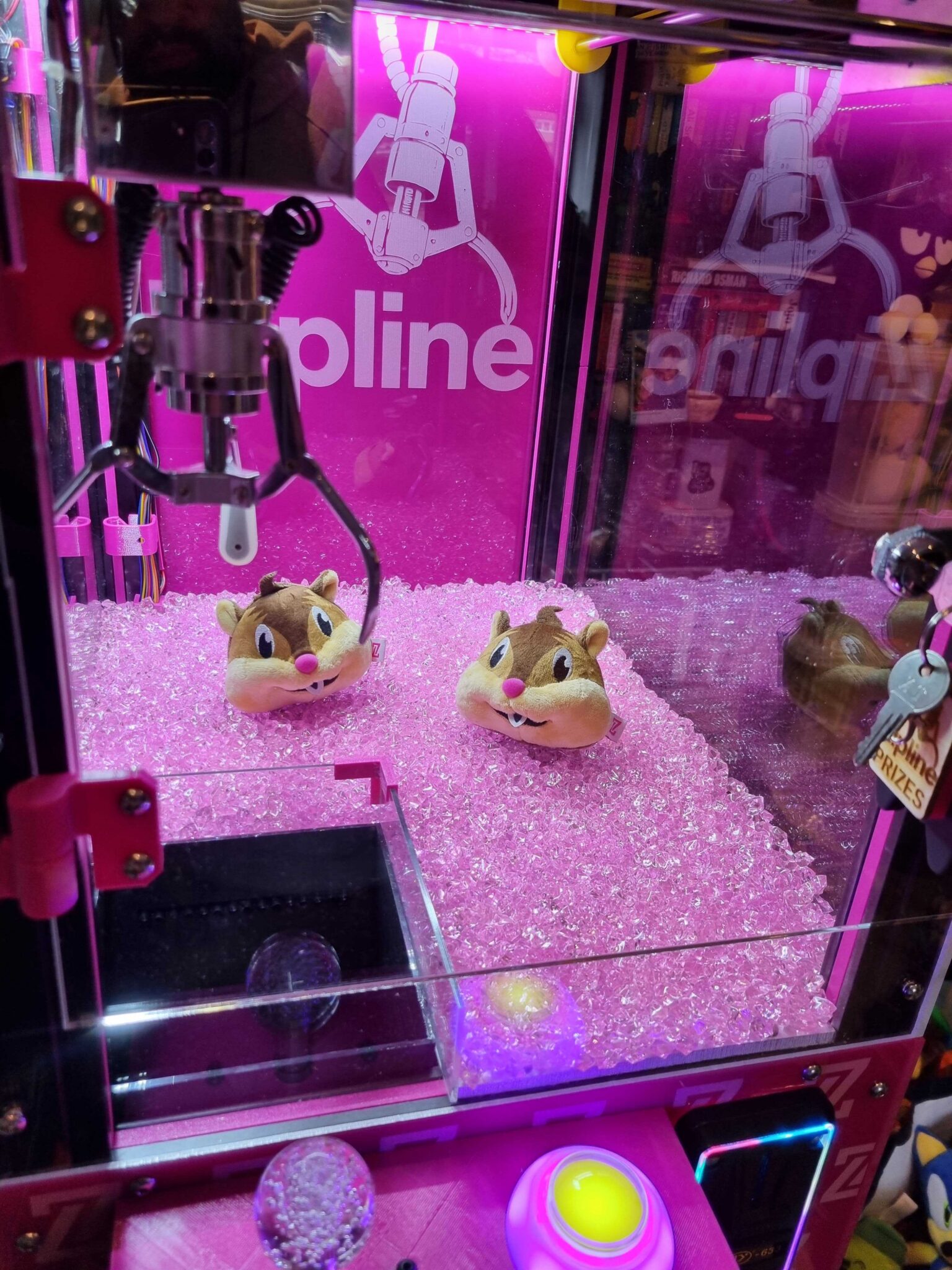
When Summer Camp, Zipline’s annual customer conference, rolled around that year, the prototype was ready to put in front of customers for feedback. “There was a lot of excitement,” Clinton remembers. “After Summer Camp, we iterated on it for another six months and then launched.”
Optimizing for accuracy
For frontline teams, the value of Zippy is that it knows what your company knows. If there’s policy, guidance, or communication that exists in Zipline at your permission level, you have access to it in seconds. All you need to do is ask.
For the store associate picking up today’s task list or the manager checking on an updated returns policy, Zippy helps close the gap between information retrieval and execution. A store associate doesn’t need to find a supervisor to get the answer they need: Zippy acts like an experienced shift buddy.
Over the last few years, improvements to Zippy have been centered around making the tool even more accurate and trustworthy.
That accuracy matters because what Zippy says is what gets surfaced to a customer and it’s what gets amplified as operational fact. The engineering team at Zipline knew they needed to continue to train Zippy with a bias toward accuracy, the ultimate goal being to ensure that the information Zippy surfaces is accurate enough to say out loud to a customer and helpful enough to keep pace with the flow of work.
But for the first two years, there was a ceiling. Zippy’s knowledge was limited to the information that already existed in Zipline. Then customers started asking for answers Zippy couldn’t reach.
MCP: The evolution of Zippy
The next era of Zippy was sparked by a conversation with a customer at the annual NRF conference.
One of Zipline’s customers, a large shoe retailer, expressed interest in adding MCP functionality to Zippy, which would extend the tool’s ability beyond available source material.
For the last year, customers had been interested in AI functionality on the platform, but this large shoe retailer had a specific need for real-time information. This meant moving beyond having to generate documents and throwing them into the resource library for Zippy to read. Users could now ask Zippy: is this [item] in stock? What’s my timesheet as an associate? Among other queries.
In essence, MCP connections let the AI agent ask another system a question and get an answer back, which was a functionality the team had been considering for some time based on a problem Zipline users were encountering more and more.
The problem didn’t just exist, it was persistent for frontline teams managing more tasks with fewer colleagues, across more systems than ever before.
Now that Zippy could talk to systems outside of Zipline and the systems could talk back, the team had to make sure permissions and security were solid.
Airtight permissions
When you connect Google Calendar to Claude or ChatGPT, you’re granting permissions for your data to be transmitted in order to fetch information about your schedule, upcoming meetings, and time off. When your organization connects Zippy to the company’s scheduling system, it also authenticates through that single point, meaning that thousands of people can ask about scheduling through the permission granted.
Where it gets trickier is when you have publishers that want to add MCP servers to Zippy but also need to authenticate a whole group of users to that server.
“It wouldn’t make sense to develop an MCP server functionality where Zippy could ask about anyone’s timesheet or the inventory for some unrelated store,” Clinton explains. “We had to take what we’ve already mastered — delivering just the right information to the right people at the right time.”
That principle isn’t new to Zipline. The platform’s hierarchical structure has always mapped communication, task assignments, and training to only the people who need it. The MCP integration needed to work the same way.
Senior Zipline engineer Paulo Ancheta solved this by building an authorization scheme that attaches each user’s identity and permissions to every outbound request
By attaching identity to every outbound query, the customer’s own server can then decide what any individual employee is allowed to see.
Now, an associate can ask Zippy if they’re scheduled for work tomorrow, and Zippy is able to give them a personalized answer relevant to their role.
Beyond the AI hype
There’s a lot of AI hype right now. Some of it is useful, some of it is random and shiny.
To build a product like Zippy with its new MCP capabilities, you have to start by asking what problem it actually solves.
“If Zippy looks cool and is a neat toy but doesn’t actually make people’s jobs any better, then what are we doing here,” Clinton asks. “That sets us apart at Zipline. The goal is the mission. You have to have a reason for it to exist. And that feels satisfying versus just chasing hype.”
Which brings us back to where we began. The less time users spend in the app, the better.
Zippy doesn’t exist to keep users in the app. It exists to support real in-store experiences so customers can get the answers they need without feeling like there’s a computer in the middle of the conversation.
This article is part of an interview series in conversation with the experts at Zipline building smarter solutions for the next generation of retail operations.