In retail, curveballs are part of the job. The brands that thrive aren’t the ones with perfect plans—they’re the ones with leaders who know how to respond.
The best operations leaders don’t just brace for the unexpected, they design for it. They build flexible, people-powered systems that hold up under pressure: clear communication, active feedback, and tight alignment between HQ and the field. When those elements work in sync, execution doesn’t stall—it accelerates.
Because when communication flows both ways, so does momentum.
This is the power of the frontline feedback loop. And the best operators aren’t just using it.
They’re designing for it.
Retail Doesn’t Need More Directives. It Needs Better Dialogue.
Execution in retail doesn’t break because teams don’t care.
It breaks because teams aren’t looped in.
Most brands still operate in a top-down communication model. HQ sets the plan, stores are expected to run with it, and feedback comes only after something goes sideways. In a world where change happens fast, that model is no longer just outdated. It’s a risk.
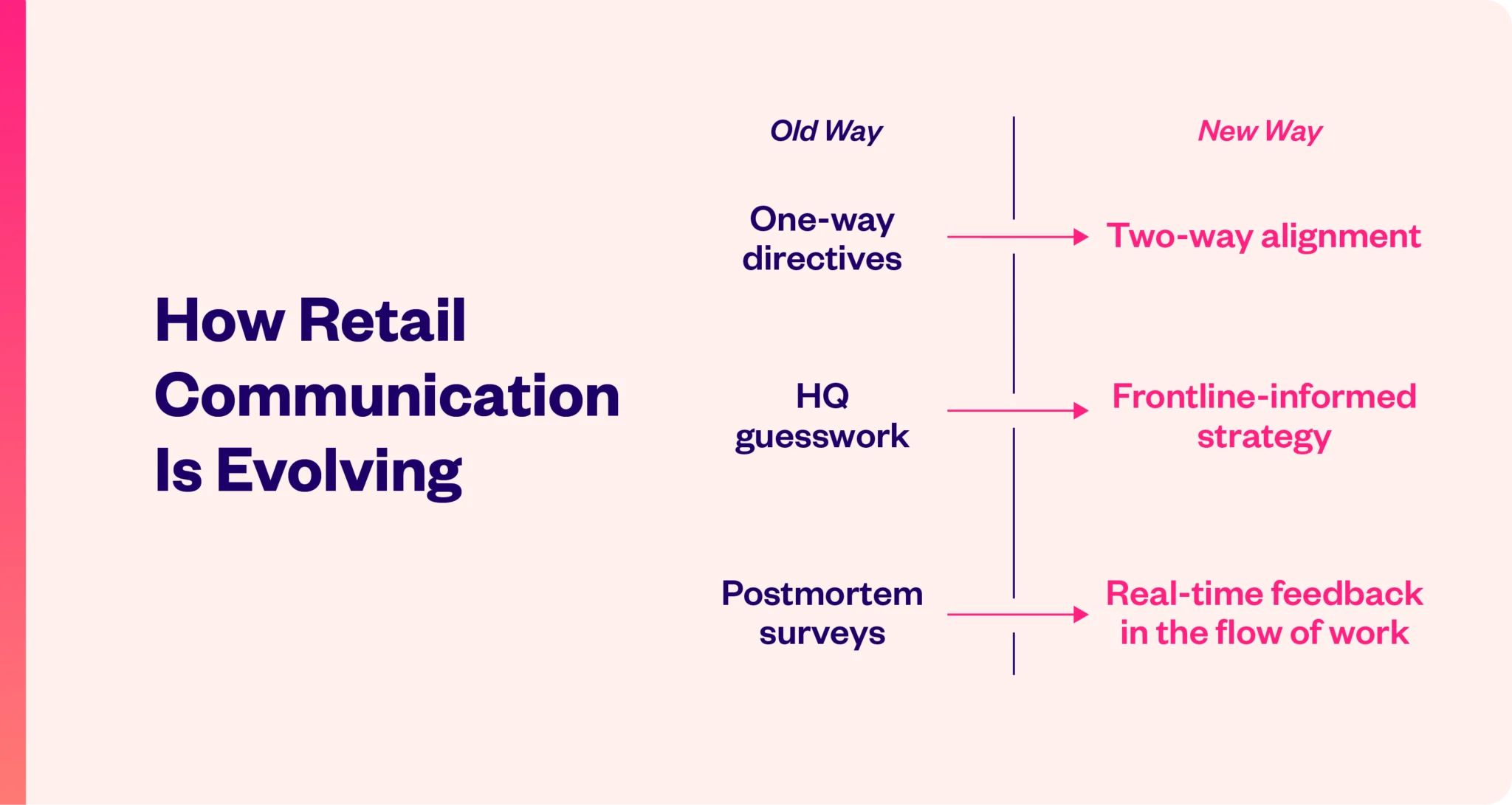
The best operations leaders have figured this out. They’ve built something better: a continuous feedback loop between HQ and the field—a closed system that fuels agility, builds trust, and ultimately delivers better business outcomes.
We’ve seen it firsthand through the Women in Retail Leadership Summit (WIRLS). The leaders featured in Zipline’s eBook, Sparking Real Change in Retail Operations: 5 Stories From the Women in Retail Leadership Summit, aren’t just executing better—they’re architecting a new kind of ops culture. One where frontline insights are treated as inputs, not noise.
The Feedback Loop in Action
Let’s be clear: feedback is not a suggestion box.
When done well, it’s an operational system with structured inputs, actionable flows, and clear accountability. Here’s how top leaders have put that into practice:
Kacie Ulsh, Former Head of Field Experience, maurices

During the chaos of 2020, Kacie led communication for 8,000 furloughed employees. But instead of broadcasting updates, she built a loop—using Zipline to collect real-time sentiment, rollout reactions, and team needs. That loop evolved into a weekly feedback rhythm that reaches the C-suite.
Result: A high-retention, high-resilience workforce that helped maurices accelerate post-COVID transformation, including a smooth POS overhaul.
Suzanne Kiggin, Head of Ops & Customer Care, ASI

Suzanne entered an organization with heart—but fragmented communication. She rebuilt the feedback structure from the ground up, personally walking stores and distribution centers to hear what teams needed. She then operationalized that into scalable systems, turning disconnected departments into a unified org with measurably stronger performance.
Result: Boosted engagement, elevated brand perception (up to 4.9 Google stars), and aligned execution from warehouse to showroom.
Meredith Anton, VP of IT, Parallel

In a high-complexity cannabis retail environment, Meredith used her credibility as a former consultant and in-store leader to push for communication tools that captured true field friction. She didn’t just champion tech—she used field feedback to pressure-test it. Her advocacy helped drive internal buy-in and rapid rollout, even against early resistance.
Result: Faster tech adoption, fewer missed details, and more strategic decision-making at scale.
Feedback as Infrastructure, Not Sentiment
When brands view feedback only as a soft metric—something to monitor post-launch—they miss the point.
In leading ops organizations, feedback is a live system. It’s how:
- Change readiness is assessed
- Rollouts are adapted in real time
- Employee voice becomes strategic signal
- Performance gaps are caught early
- Trust is built across layers of the org
This mirrors what modern product-led companies do every day: listen, iterate, and ship smarter. Retail ops leaders need that same playbook, and some are already running it.
So What’s the Shift?
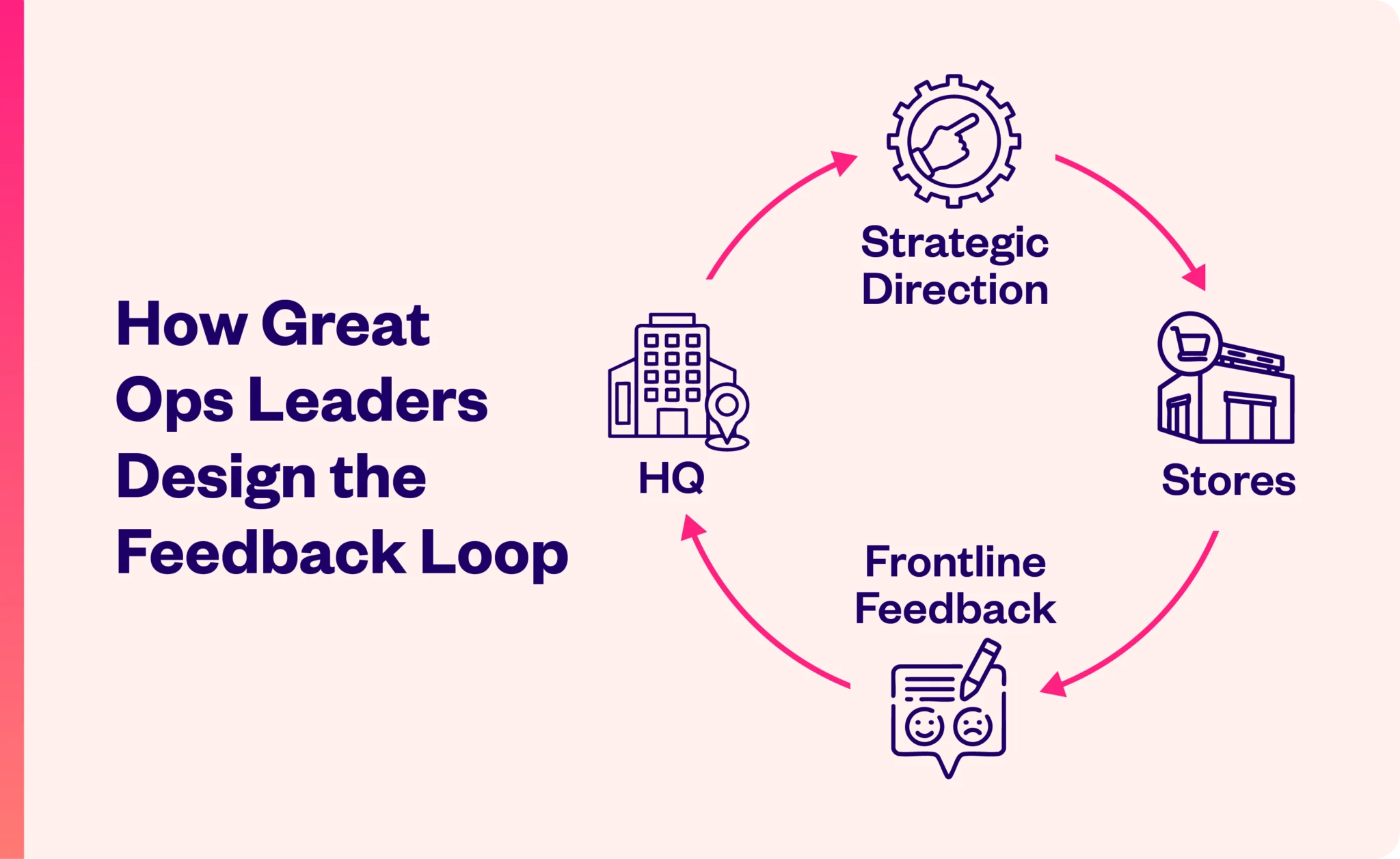
Retail ops leaders today aren’t just communicating better—they’re rethinking the structure of how communication and insight flow across the business. Here’s what that evolution looks like:
From one-way directives → to two-way alignment
Instead of HQ dictating what stores should do, leaders are creating systems where field teams can share what’s working, what’s not, and shape future rollouts.
From HQ guesswork → to frontline insight at the core
Rather than assuming how things land, teams now build strategies informed by what the frontline is experiencing in real time.
From postmortem surveys → to real-time feedback loops
Instead of waiting for issues to show up in quarterly reviews or exit interviews, ops leaders gather feedback in the flow of work—making changes faster and smarter.
Explore What It Looks Like in Practice
If you want to see what a frontline feedback loop looks like in action (and hear more stories from leaders like these), there’s no better place to start than Sparking Real Change in Retail Operations—a curated collection of stories from the Women in Retail Leadership Summit (WIRLS).
Across six years, this series has celebrated the women quietly leading some of the industry’s biggest transformations—from navigating crises to building alignment, from advocating for frontline teams to modernizing outdated systems.
Their stories offer more than inspiration. They offer a new standard for what retail leadership can look like—rooted in clarity, connection, and follow-through.
And consider: What would your team do with a better loop?