
I was a store leader for twenty-four years. I led small teams in specialty retail. I also led large teams in huge buildings, coordinating a four-hour daily restock, visual managers, and furniture sales. I worked for privately held retail companies and brands that were publicly traded. Want to know the throughline? Want to know what was the same at every job I ever had in retail?
The communication in every store was a struggle.
Communication from the store leader to support leaders wasn’t always thorough. Communication from district managers got lost in the shuffle. Communication from HQ could be confusing, baffling, or infuriating. Communication often made me straight up angry. Honestly, sometimes communication was downright maddening.
For example, we’d get directions to reset a denim wall—a project that could take two people eight hours. Two days later, HQ sends a message to mark down half of that product and transfer it out. So, I just wasted 16 payroll hours by setting that denim wall. That’s the message I heard. We’re wasting your time. Frustrating. Especially when payroll hours were so slim.
There was no reason communicated for the double work. No why. Sometimes it felt like the visual department, allocations, and my regional manager all worked for different companies.
Do these people talk to each other? I would ask almost weekly.
For me, technology like Zipline didn’t exist yet. After fifteen years of miscommunication, I finally cobbled together a communication system that worked with our store leadership team. Want to know what it was?
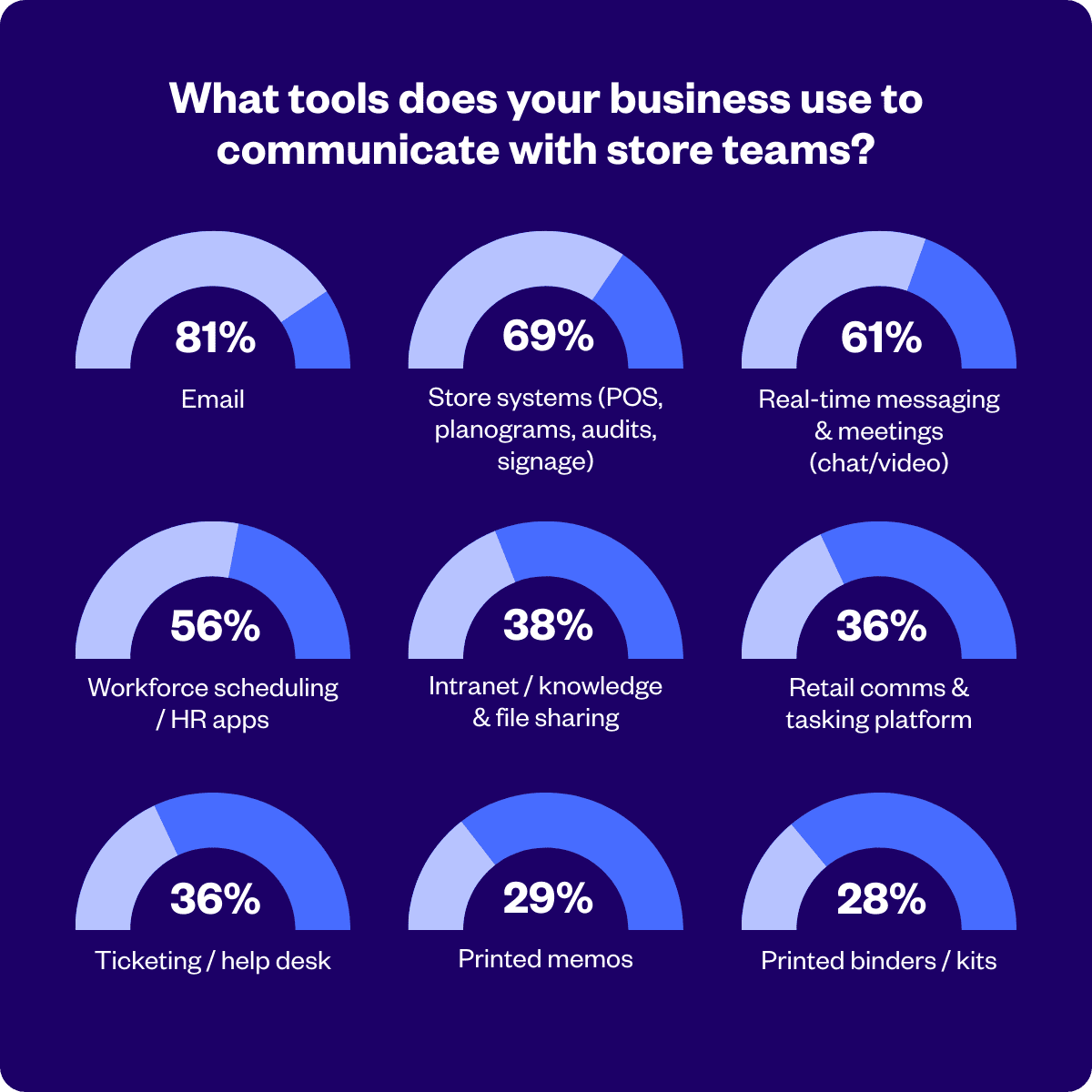
Email: the illusion of connectivity
A daily email—really. Every morning, we’d start a new email and use the date as the subject line. We’d make note of the events of the day, just the facts. It would look like this.
- Markdowns complete
- 45 boxes of shipment
- Jessie cleaned the bathroom
- Mismate shoe in office – I’ll look for it tomorrow
And on and on and on. At the end of the day, the closing manager would email this to our store account. Every leader had to read it at the start of their shift. It helped. All of our internal communication was in one place. But there was always more to track down.
After leaders were up to speed on our internal communication (the email), we’d have to read all the other emails that flooded our inbox. We’d look at our Activities Calendar (sent weekly by HQ), and refer to the weekly newsletter (again, sent by HQ). That’s not it.
I haven’t even told you about the posters in the back room or the loss prevention topic of the week. I haven’t even mentioned the product knowledge laminate that we threw up at our cashwrap and hoped someone read when they had an extra 30 seconds. I won’t even get into maintenance requests or supply orders, both of which operate on different systems with unique logins.
Somehow, my leadership team stayed on top of all this along with me. Somehow, we still managed to make our sales team feel included, cared for, and motivated. In turn, our customers loved our store. But all of this took an enormous amount of effort, concentration, and diligence. We did all this data collection and organization ourselves every day.
That’s why, reading through Zipline’s new report, Misaligned: The 2026 State of Retail Communication and Execution, had me so stoked. It so accurately reveals the disconnect. It presents unique data points and advocates for people in stores.
The crisis of resources
The Misaligned report highlights the communication gaps between stores, HQ, and upper management. It exposes how HQ thinks they know what a day in a store is like, but the teams in stores don’t think they do know.
I’m going to highlight a few figures in the report I found most insightful. I also recommend reading the report thoroughly. The feedback collected here is how I felt running stores for twenty-four years. We’re only now talking about it on a broader scale.
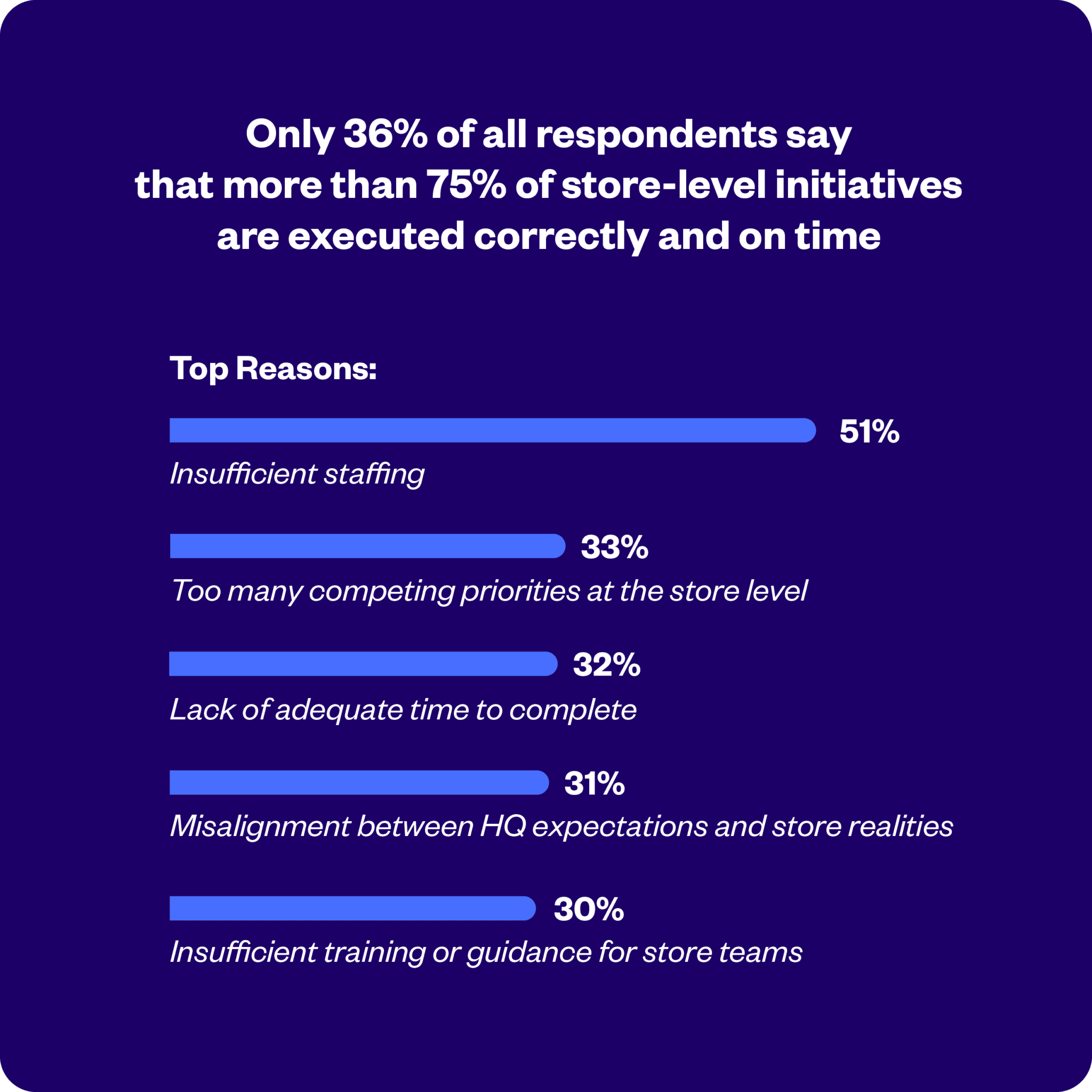
According to the report, initiatives fail due to a crisis of resources.
- Insufficient staffing
- Too many competing priorities
- Insufficient training or guidance
- Lack of adequate time to complete
- Misalignment between HQ expectations and store realities
The imperative takeaway:
HQ overestimates the time, capacity, and clarity that frontline teams actually have.
Yes. Pretty much always. HQ delivers their message to a team of people in a store. Do they remember that those people have customers with varying needs? Did they account for the two callouts, the associate dealing with a medical issue, or the customer who loves to argue about coupons? Retail teams are managing chaos every day from every angle. So, however long you estimate a project will take, double it.
Completing a project in a retail store means managing it with constant interruptions, all while keeping a smile on your face.
Insufficient staffing
I’m going to pull the thread on that insufficient staffing figure for a moment. That was the most frequently cited challenge. Store leaders called out insufficient staffing 57% of the time in this survey. Why? Because payroll hours are reduced almost every year. It’s challenging to hire a full staff and keep them. It’s even more difficult to reduce turnover and complete projects when HQ gives you fifteen payroll hours when you need thirty.
The other statistic in this report that I wish were flashing in neon is this:
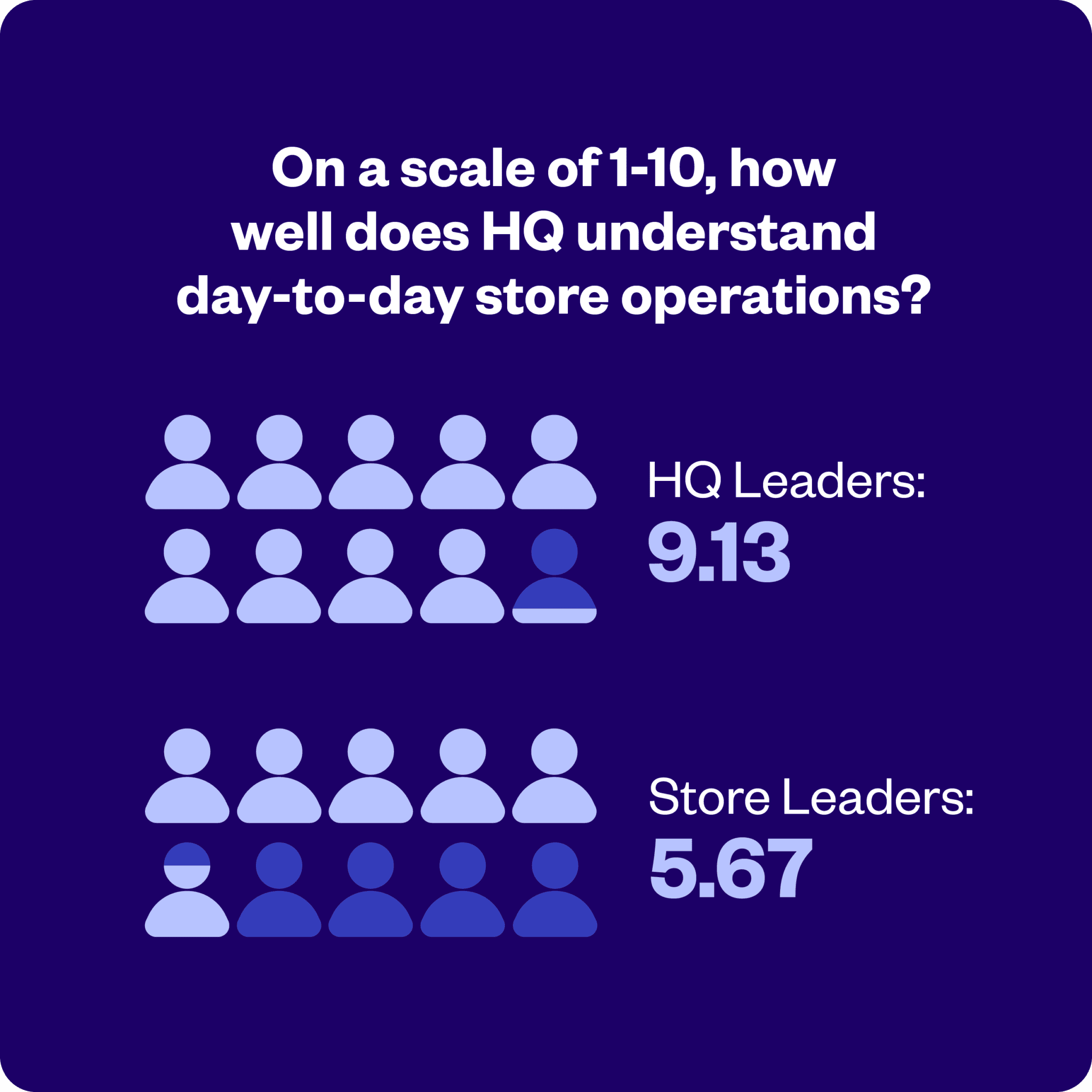
“When corporate leaders were asked to rate their understanding of day-to-day store operations, they gave themselves a confident 9.13 out of 10. Store leaders, when asked the same question about HQ, gave them a failing 5.67 out of 10 — a disconnect that shapes how initiatives are planned, resourced, and executed.”
HQ rated themselves a 9.13 out of 10 on understanding day-to-day store operations. I almost spit my coffee out – a 9.13? Most HQ employees don’t understand the day-to-day operations because they don’t visit stores. Many have never worked in stores. They also rely on email to communicate, which is inferior now.
Begin to reduce burnout
Today, we have better ways to keep in touch. Better ways to ensure tasks are completed, and better ways to motivate and inspire. Email is not it. If you’re relying on old technology to communicate, you’re letting your employees down. They can’t provide the best experience with outdated tools and customers won’t wait around for you to figure it out.
Put everything your store teams need in one place. Streamline it. Because when you don’t, store teams get unnecessarily burned out. Looking for information in six places and piecing it together is a huge drain. Retail leaders are time starved and this is one of the reasons why.
This insightful report, appropriately titled Misaligned, reveals the disconnect in stark terms. Go read it. Soak it up. Your employees and your customers need you to get this right.
Because the next bright idea for your business may come from the frontline, but if you’re relying on email, you’ll never see it.
About Kit Campoy
Kit Campoy is a retail expert and author of the book, The Retail Leader’s Field Guide. She spent 46,000 hours in stores leading teams. Today, she trains frontline teams and writes for world-class SaaS retail tech brands.