

Store teams show up every day ready to deliver: for customers, for their teams, and for the brand.
I’ve seen that firsthand over and over again. What I’ve also seen, too often, is how easily we make their jobs harder than they need to be.
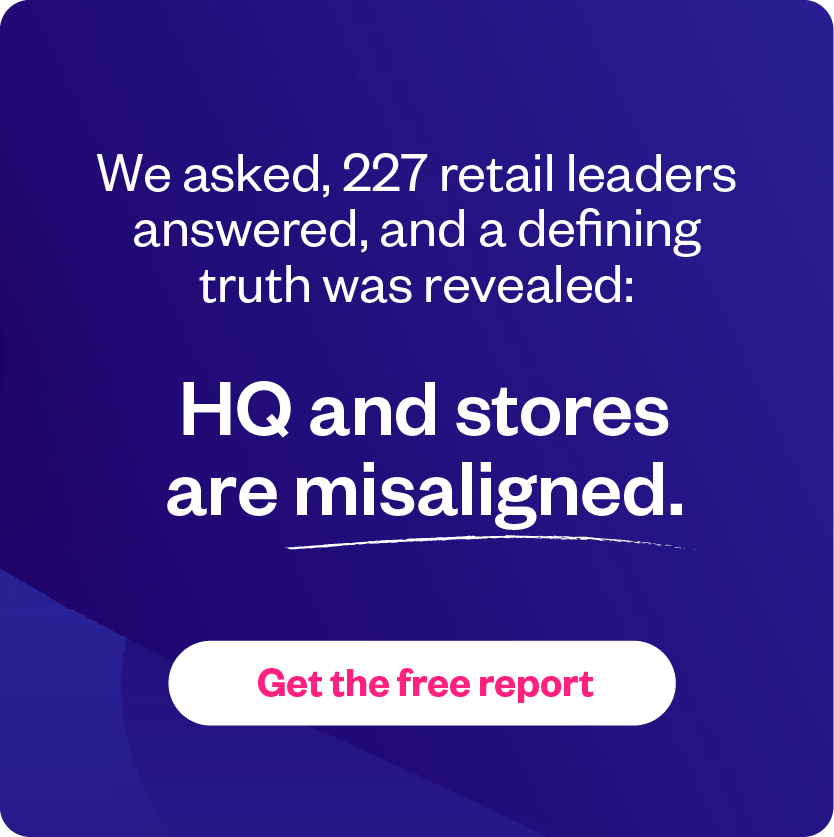
While it isn’t surprising, it’s startling to see so succinctly in a single stat that headlines our new research report: when Zipline and Studio by Informa TechTarget surveyed 227 retail leaders, we discovered that HQ leaders rated their understanding of day-to-day store operations at 9.13 out of 10. Store leaders working on the frontline? They rated HQ’s understanding at 5.67.
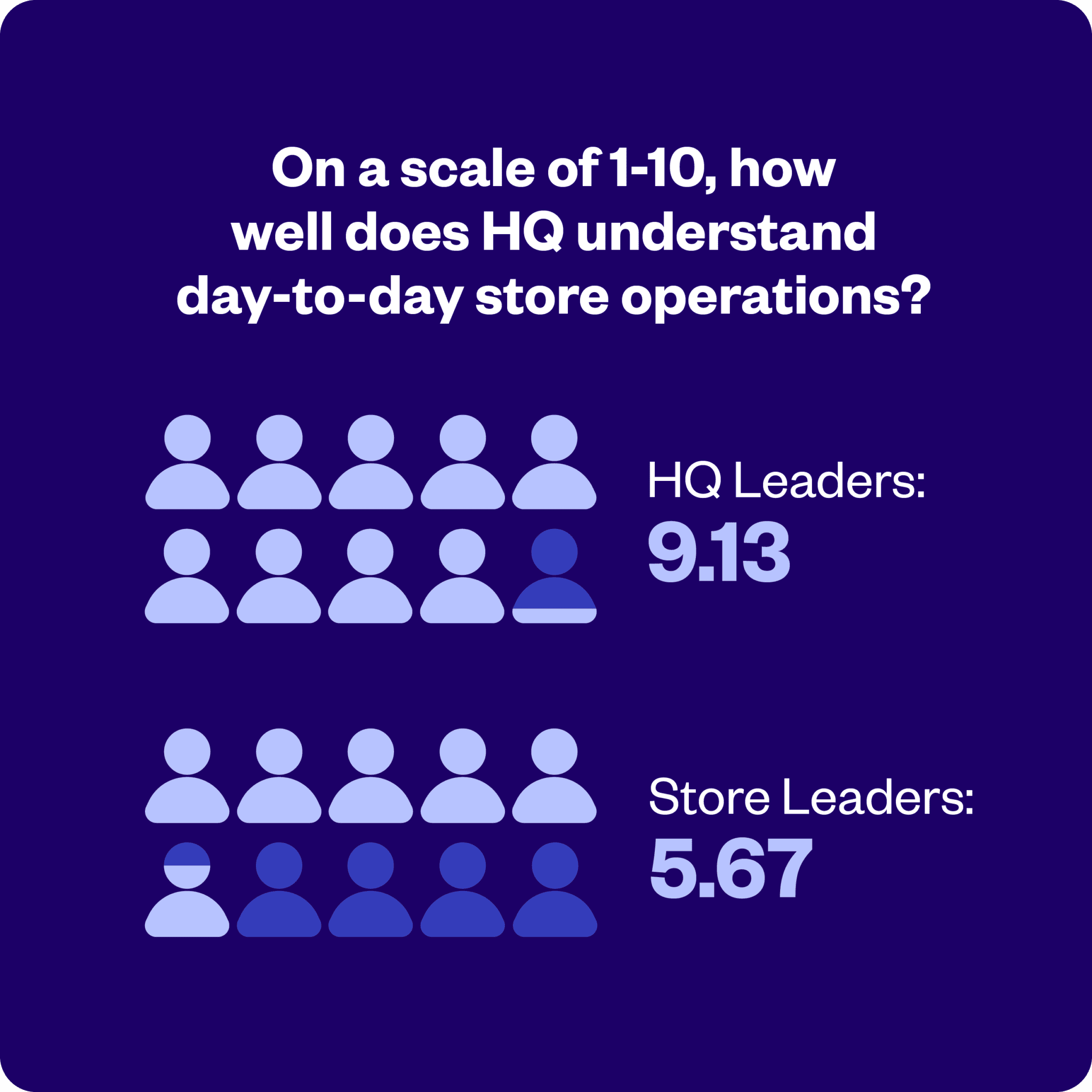
That gap is the disconnect at the heart of retail execution.
When there’s a disconnect between how HQ thinks stores operate and how stores actually operate, everything downstream suffers.
Promotions don’t land as intended. Product launches get delayed. Store teams are left juggling competing priorities with too little time and too few people. Field leaders end up stuck in the middle, trying to translate strategy into action while managing the frustration on both sides.
Below, I want to explore a few of the most significant insights from the report. But the strongest takeaway here is simple: stores don’t need more urgency. They need more clarity, capacity, and trust.
Misalignment isn’t just messy. It’s expensive.
When execution breaks down, the impact isn’t abstract.
In the survey, retail leaders were clear about what happens when initiatives are missed or delayed. The top consequences weren’t “minor inefficiencies.” They were lost sales or revenue (43%), lower employee morale on the front lines (33%), and inventory issues (29%).
That combination should make everyone pause.
Because it means the HQ–store disconnect isn’t just a communication issue. It’s a growth issue. It’s a profitability issue. It’s a retention issue.
And internally, it creates a compounding effect. When teams are already stretched thin, every missed initiative creates more cleanup work: more follow-ups, more audits, more escalations, and more frustration.
The execution crisis is a capacity crisis
One of the most important things this research makes clear is that execution doesn’t fail because store teams don’t care.
It fails because we’re asking stores to do the impossible.
When respondents were asked what causes initiatives to fail, the top answer wasn’t unclear messaging or poor follow-through: it was insufficient staffing (51%). That was followed by too many competing priorities (33%), lack of adequate time to complete the work (32%), misalignment between HQ expectations and store realities (31%), and insufficient training or guidance (30%).
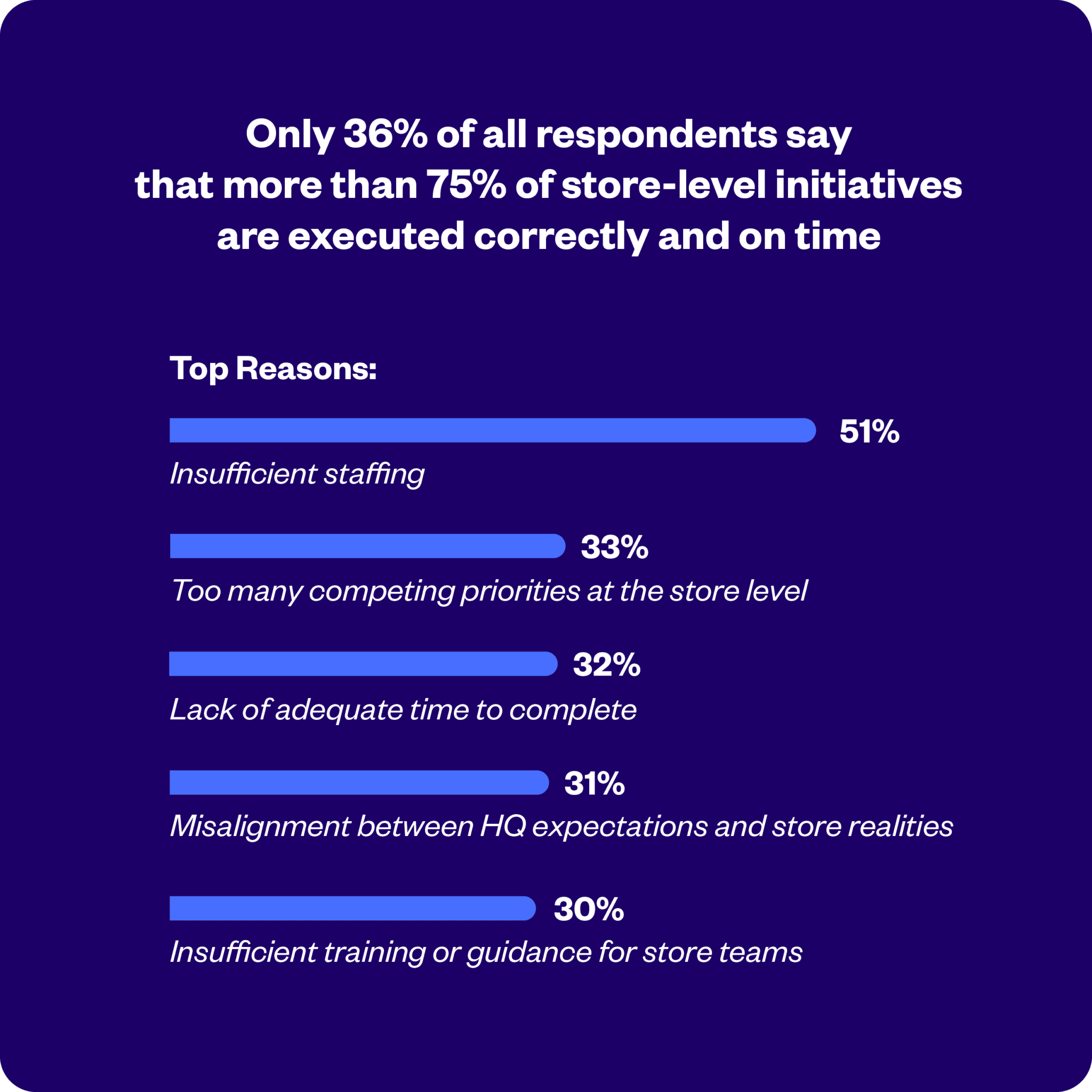
Taken together, this paints a picture that I think every retail leader recognizes: store teams are operating in a constant state of constraint.
So initiatives collide. Priorities blur. The most important work doesn’t always win. And the end result is predictable: execution becomes inconsistent, even when teams are working incredibly hard.
Communication isn’t the problem. Complexity is.
Retail has become incredibly complex, but most communication systems haven’t evolved to match it.
In the survey, 81% of retail leaders still rely on email as a primary communication tool. That alone isn’t surprising. What’s more telling is what happens next: even HQ leaders admit the system isn’t working. 67% say their communications are at least sometimes ignored, duplicated, or deprioritized at the store level.
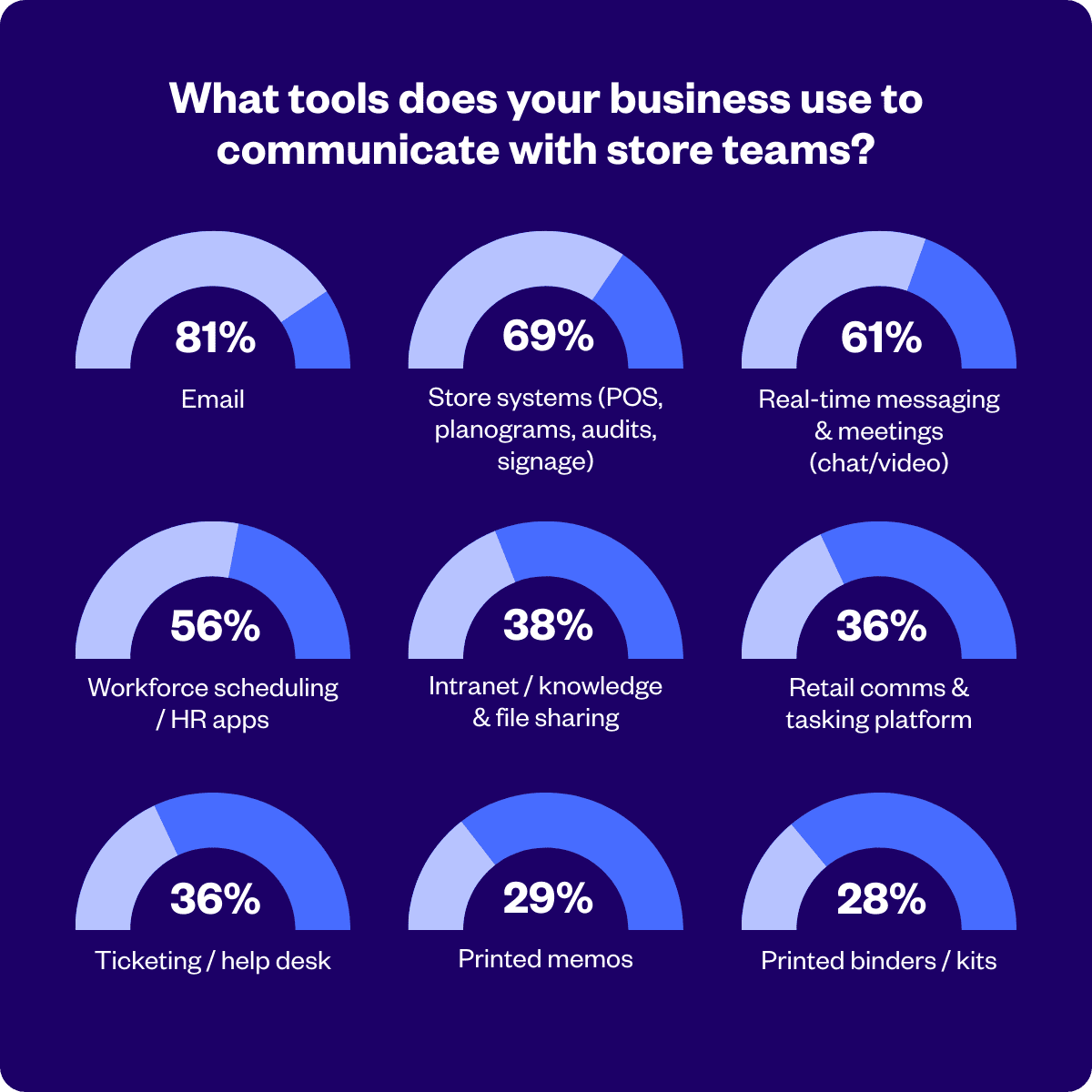
And that’s what “communication breakdown” often really means: not that people didn’t get the message, but that the message arrived in a flood of other messages, with no clear way to prioritize what matters most.
When communication becomes noise, execution becomes optional.
When feedback loops break, morale breaks too.
One of the most concerning findings in the report is how different HQ and store leaders feel about feedback. 56% of corporate leaders believe there’s a clear, consistently effective way for frontline teams to share concerns when initiatives don’t work. That’s already low, I think. But then only 30% of store leaders agree.
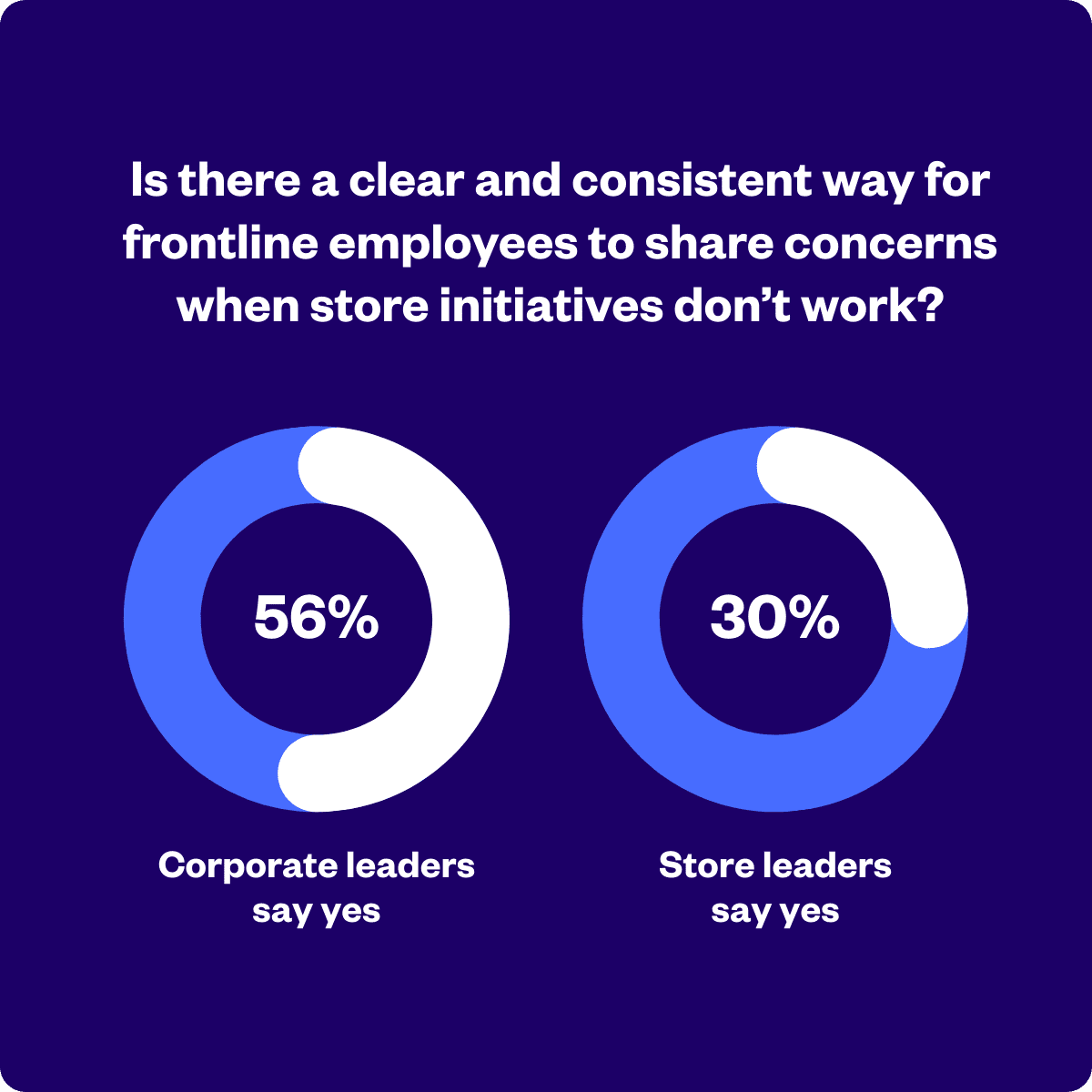
That means 70% of the leaders closest to execution don’t feel they have a reliable way to raise what’s broken or get support fixing it.
And when store teams don’t feel heard, the emotional impact shows up quickly: 52% of store leaders say poor HQ communication causes unnecessary stress, 47% say it reduces motivation, and 45% say it leads to frustration with leadership.
What great retail leaders do next.
The good news is this: alignment isn’t a mystery. It’s a choice, and it’s something leaders can design for.
Based on what we saw in the data, there are a few moves that matter most:
First, build shared visibility into store reality. Not through dashboards alone. But through consistent exposure to what store teams are actually navigating. If HQ doesn’t understand the day-to-day constraints, even great strategies will be built on faulty assumptions.
Second, prioritize like you mean it. Stores can’t execute 12 “top priorities.” Treat initiative load like a budget: if something new comes in, something else has to come out.
Third, turn communication into infrastructure. Communication can’t just be a broadcast channel. It needs to drive action: clear expectations, simple prioritization, and a way to confirm progress without creating more admin work.
And finally, elevate the frontline voice. If store teams don’t have a reliable way to surface friction (and see action taken) then the system will keep breaking in the same places.
Alignment is the advantage in 2026.
As always, the retailers who win won’t be the ones who communicate the most. They’ll be the ones who communicate with purpose: replacing noise with focus, friction with follow-through, and assumption with understanding.
Stores don’t suck. But the systems around them often do.
And that means the opportunity is real: we can design better systems—adopt better tools—and get better outcomes for customers, teams, and the business.