Every field leader knows the pattern. A few stores are a mess and get most of your attention. A few are rockstars who need little from you. And then there are the stores in the middle.
That’s where problems start. Not because those stores are failing, but because nothing tells you they’re drifting. By the time it shows up in your numbers, you’ve missed the window, and you’ve got your next problem store.
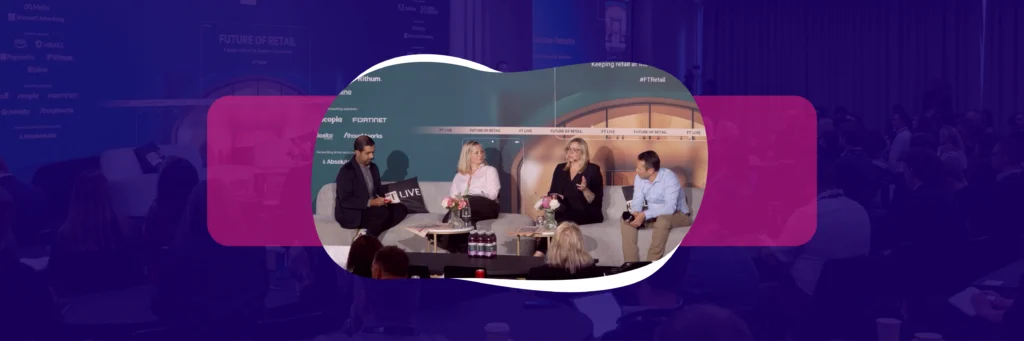
In this conversation, Ryan Holm, DVP of Retail Innovation & Operations at Helzberg, shares what he learned in the field, what it takes to spot early signals when you can’t be in every store, and how Helzberg is working with Zipline to build ZipCoach, an engine that points field leaders to the behaviors worth acting on before results slip.
What you’ll learn
- Why the “middle of the pack” is a field leader’s biggest blind spot, and what it looks like when one of those stores starts to slip
- Why spreading your time evenly across every store feels fair but usually isn’t, and what Ryan does instead
- Which behavior signals Helzberg tracks, like average shift length and store manager engagement, and what they say about a store’s health
- How stores are compared to similar peers, not the whole fleet, so targets are realistic for each location
- How Helzberg rolled ZipCoach out to its regional managers as a way to give them time back, not a mandate
- Why Ryan threw out a signal the data said was important (and what it teaches about keeping an operator in the loop)
Jump to the moment you need
- 0:00 Meet Ryan Holm
- 3:20 A regional manager’s week across 11 stores and three states
- 5:19 Worst stores, rockstar stores, and the middle-of-the-pack blind spot
- 7:14 Early warning signs: communication issues, disengagement, and burnout
- 10:21 Why the best operators stop spreading their time evenly
- 15:22 How Zipcoach connects behaviors to store results
- 18:31 Signals in action at Helzberg
- 23:24 How the ZipCoach rollout went
- 26:03 Live Q&A
Webinar FAQ: Closing Store Performance Gaps
Field leaders asked how to spot struggling stores early and act before sales slip, and this FAQ collects the answers. They come from our webinar with Ryan Holm (DVP of Retail Innovation & Operations at Helzberg) and Nerea Ruiz de Gauna de Santiago (Lead Data Scientist at Zipline).
Attendees asked nine of these questions live and we added a few more that have come up in conversations and are worth answering. Ryan’s team and Zipline have spent several months co-developing ZipCoach, so these answers reflect early, hands-on experience.
How ZipCoach decides what matters
How do you decide which stores count as peers?
With ZipCoach, your stores are compared with similar stores, not the whole fleet, and each store’s targets come from what its best-performing peers do. Nerea explained that peer groups draw on many dimensions: location, store size, how the store operates, census data, and internal data. Zipline combined external data, Zipline data, and Helzberg data, with Ryan’s input throughout.
Ryan said the store environment mattered most for Helzberg, which has traditional mall stores, freestanding stores, and outlets. The sales equation in each is very different, so a like-for-like grouping was essential to getting actions that made sense.
When you say “store performance,” do you mean sales?
For now, yes: ZipCoach uses sales-to-goal ratio, meaning how a store performs against its sales goal. Nerea noted that any performance metric would work, and the engine is flexible enough to follow whichever indicator drives your business.
Does ZipCoach include scheduling data?
Yes. Helzberg already had an integration with its workforce management partner, so scheduling data was available from the start. Ryan called this one of the pleasant surprises of the build.
Average shift length is a good example. ZipCoach doesn’t flag it as simply “above or below” a number. It uses a target range based on peer stores, because both ends signal trouble:
- Too low: the store may lean too heavily on part-timers to run the floor, which can hurt performance.
- Too high: the team is heading toward burnout, and a store relying on full-timers working overtime has little flexibility to add part-time coverage on a Friday evening or Saturday.
Nerea added that more indicators make the picture better, since a store rarely underperforms for one reason alone. Ryan said new data sources are what excite him most about what comes next.
Getting regionals and store managers to act
Did you set common actions for a weak metric, or do regionals choose their own?
Regionals make the call. Ryan’s team and Zipline worked together to define a handful of options for each flag, such as sending a task or a message to the store manager or assigning a learning course. They also added an “other” checkbox with room for a note, so a regional can record what they actually did, like a one-on-one with the manager.
That record matters later. Once enough actions are logged, ZipCoach can measure which ones worked best for each flag and tell regionals which action has been most effective for their peers. Nerea added that it also tracks the impact on store metrics in the weeks after an action is taken.
Are regionals buying into non-traditional metrics, like communication or search feature usage?
Yes, though Ryan said the positioning mattered. Helzberg did not present ZipCoach as a replacement for the daily review of results in its BI tool.
Ryan explained that one indicator on its own tells them little, but four or five turned on at once start to paint a picture. Most of these metrics are ones a regional could have found alone, he said. The value is seeing them together, which “almost feels like” a store visit.
How do you get store managers to act without it feeling like another task from headquarters?
Ryan called this the hard part. His answer is to lean on regionals’ leadership skills instead of pushing targets. The goal is not to chase a behavior metric but to understand what is going on in the store compared with the best-performing stores and fix the root cause.
Delivery helps too. Actions appear in the day sheets and messages where teams already work, so there is no new tool to check and no extra steps to remember.
Measuring what works
How does ZipCoach evaluate whether an action worked?
ZipCoach looks at long-term store performance, not just whether a message was read or a task completed. Nerea explained that the team compares stores that acted on a recommendation with peer stores that had similar issues and did not act. The aim is to attribute performance differences to the actions as rigorously as possible, so recommendations are based on what truly moves results.
Can the data point you in the wrong direction?
Yes, and Ryan shared an example. Zipline’s analysis found a strong correlation between store associates reading messages from the e-commerce team and store performance. Ryan didn’t see why that would matter, and it took weeks to solve the puzzle.
The e-commerce team was messaging a store when it mis-fulfilled a web order, and in Helzberg’s business the store gets credit for fulfilling that order. Without that context, ZipCoach saw only that reading e-comm messages was linked to better performance. Ryan’s team threw the signal out, because it is not a repeatable behavior they can ask associates to do more of.
His takeaway: retailers should have an operations partner lead the setup. The technical analysis is Zipline’s job, but someone who knows the business has to decide whether a behavior is one a leader can actually intervene on.
Rollout and scope
If an area manager could watch only one behavior, which should it be?
Ryan wouldn’t pick one. The value is in the pattern of behaviors, he said, and if a single metric were enough, he would put it in a report and tell regionals to keep an eye on it. What ZipCoach adds is the combination of signals, plus an easy way to act on them.
How did you roll it out to regional managers?
As a partnership, not a mandate. Ryan said Helzberg treated the rollout as an acknowledgement of how difficult the regional manager’s job is, and positioned the tool as a way to help them be more effective. He described it as early days, with deeper integrations and more measured behaviors still to come.
How deep into the organization does ZipCoach go?
It follows the same hierarchy as Zipline, so each leader sees the stores they oversee, whether they are a regional manager, a regional director, or a leader at another level.
Does ZipCoach show individual associate behavior?
Not at Helzberg. Ryan said they made a conscious choice not to surface individual items, such as one associate not reading a communication, because it didn’t fit their culture. Regionals see store trends to act on instead. He added that Zipline was willing to build around cultural choices like this one as the two teams co-innovated.
Go deeper
Ryan closed the session with a point worth remembering: in 2026 everyone is offering an AI feature, and he believes the ones with the most impact will empower field leaders rather than substitute for connection, mentorship, and leadership. The goal is more time making a difference and less time hunting through reports for root causes.
- Download the field diagnostic: Diagnose Store Performance Gaps Before They Become Revenue Gaps is a diagnostic and matrix for district managers, regional managers, and field directors. It covers four areas a store can change and shares how Helzberg is working with Zipline on ZipCoach. Download the guide here
- Learn more about ZipCoach: Learn more here.
- See how it would work for your stores: Book a call